Signs this is for you
Sound familiar?
If more than two of these land, you're the reason we made this.
Bloated by 3pm
Told it's normal
Half-used fiber tub
Regret a detox tea
On a GLP-1
Coffee is the plan
Why this exists
You brought it up at your appointment. Maybe twice.
The bloating that shows up by three and doesn't leave. The waistband that fits in the morning and doesn't by dinner. The fact that you now plan your day around whether things are going to move.
And you got some version of: that's normal.
Here's what the research actually says. Among women aged 44 to 73, 94% report digestive symptoms. Bloating affects 77%. Constipation, 54%. And 82% say it started or got noticeably worse during perimenopause.
Now the number that matters: only 33% ever received a diagnosis. In a separate survey, 61% of women said a doctor had dismissed or downplayed their menopause symptoms altogether.

What actually changed
Your gut slowed down. Two things can do that.
Estrogen doesn't only regulate your cycle. It helps regulate how fast things move through your digestive tract, and it helps maintain the diversity of the bacteria living in your gut. When estrogen declines, transit slows — more water absorbed, harder stool, more fermentation time, more gas. That's the bloating. That's the irregularity.
If you're on a GLP-1 — Ozempic, Wegovy, Mounjaro, Zepbound — you already know part of this story. These medications work by slowing your stomach down. That's the mechanism, not a malfunction. But the same slowdown that kills your appetite slows everything downstream.
And there's a second problem nobody mentions: you're eating less, which means you're eating less fiber. That isn't a medical claim. That's arithmetic.
The part nobody tells you
You're about ten grams short. Every day.
The average American eats roughly 15 grams of fiber a day. Women need about 25. Only around 5% of US adults hit the target — not 5% of people with digestive problems. Five percent of everybody.
You are not failing at something most people manage. You're in the 95%, and the 95% is the default.
It wasn't always this way. Roller milling arrived in the 1880s and stripped the bran — the fiber — out of flour, because refined flour was cheaper to make and slower to spoil. Nobody conspired. It was just cheaper. But the bacteria in your colon have been running on a fraction of their food supply ever since.
Average daily fiber intake for US adults vs. the recommended target for women.
How it works
Most fiber just passes through. This kind gets eaten.
Psyllium husk is a gel-forming soluble fiber. Add water and it thickens within seconds — you'll watch it happen in the glass.
The gel holds water and adds bulk, so things are softer, better formed, and move without straining. This is the part you feel first.
That same viscosity moderates how fast sugar hits your bloodstream after a meal, and keeps you fuller for longer.
Psyllium is fermentable. Your colon bacteria break it down into short-chain fatty acids — principally butyrate.
That's what three grams a day is actually doing. You're not flushing anything out. You're feeding something.
Why we're different
Sáno is not a cleanse. That's the entire point.
Walk down that aisle and almost everything you find is built on stimulant laxatives — senna, cascara and their relatives. They don't fix anything. They chemically irritate your bowel into contracting. They work once, harshly, on somebody else's schedule.
| Comparison | A 14-day cleanse | Sáno Daily Fiber |
|---|---|---|
| How it works | Irritates the bowel | Feeds the bacteria |
| What it feels like | Urgency, cramping | Nothing dramatic |
| How long | Two weeks | Every day, indefinitely |
| The mechanism | Flushes something out | Builds something up |
| Daily use | Not recommended | The whole idea |
What's in it
One ingredient doing the work, at a dose that means something.
Most gut supplements list twenty-two ingredients. There's a reason: when nothing in the jar is at a functional dose, the label has to do the convincing. We'd rather you checked ours.
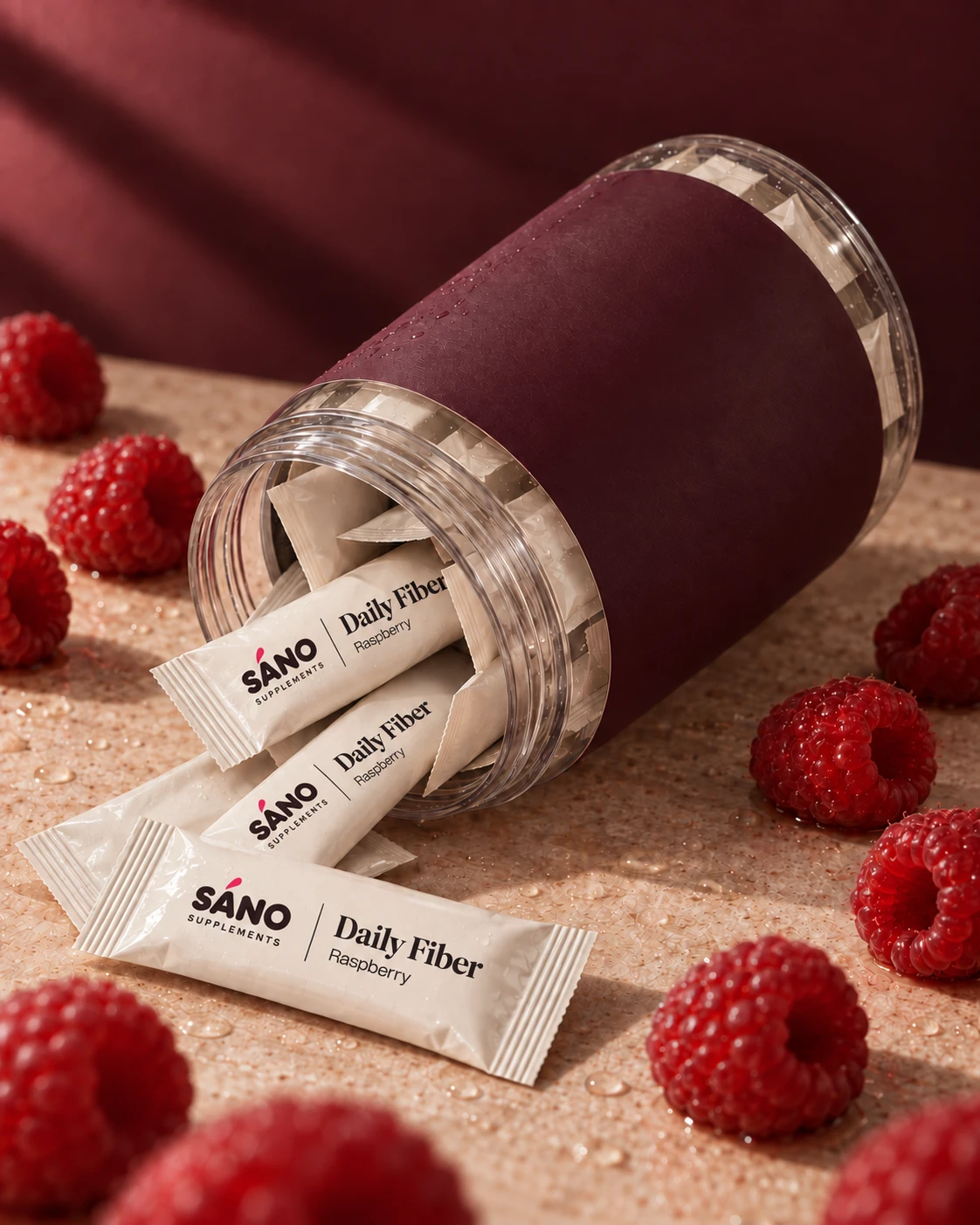
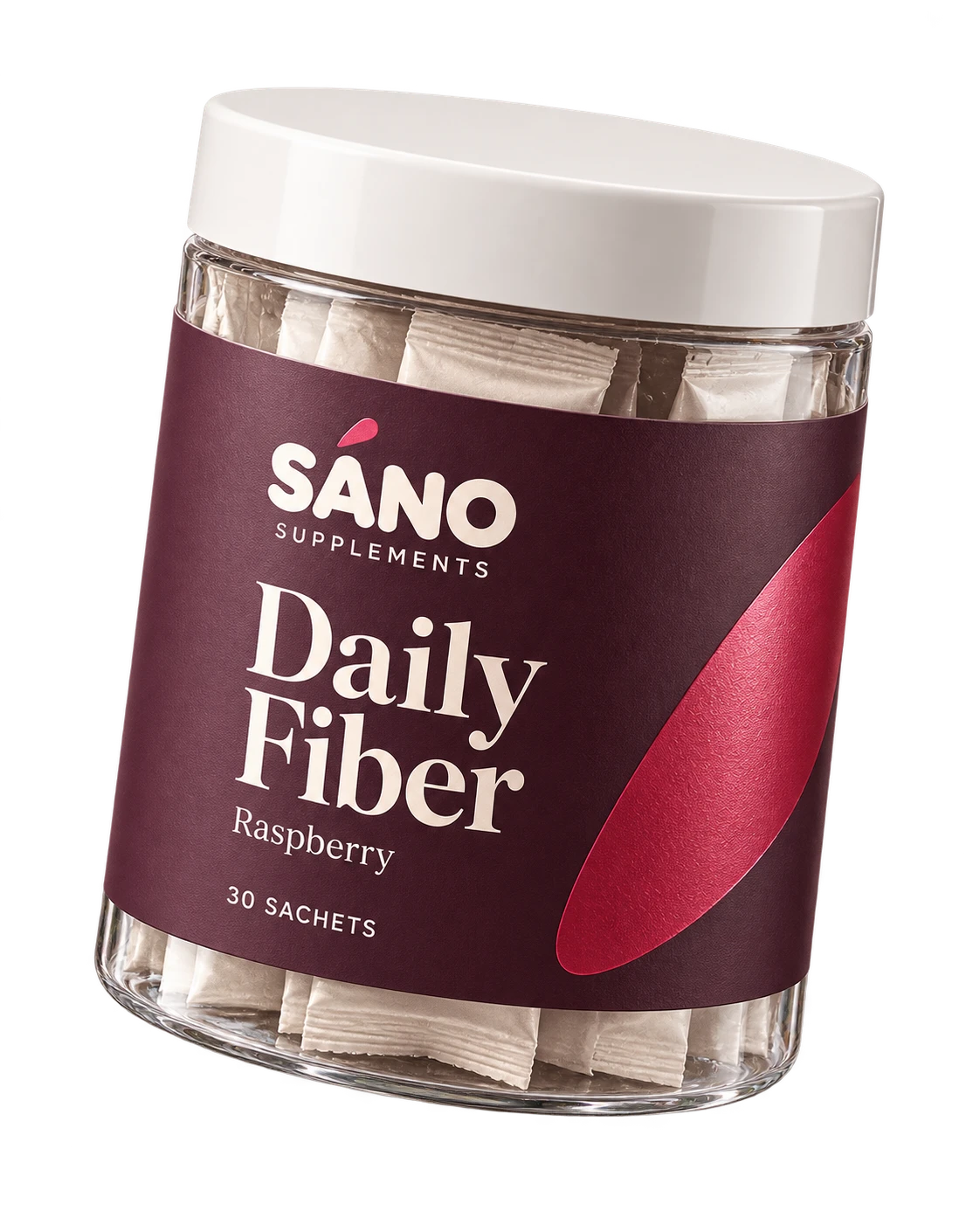
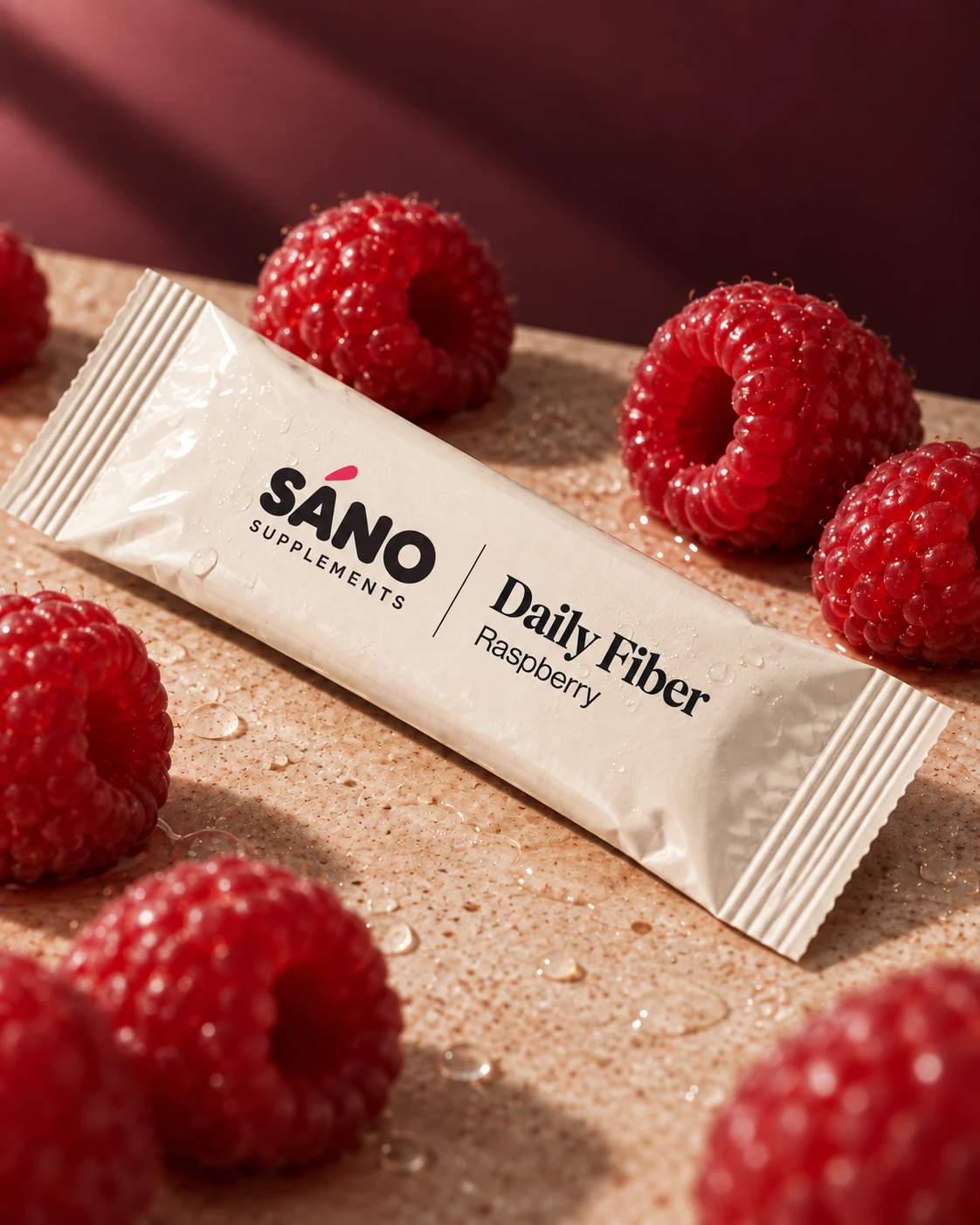
It's psyllium husk. It isn't exotic and we're not pretending it is. What's unusual isn't the ingredient — it's that we put in a real dose of it, flavored it so you'll actually drink it, and left out everything designed to force a result.

How to take it
One packet. One glass. That's the entire routine.
Drink it fast — within a minute. It gels quickly. That's the product working, and it's why it does what it does, but nobody enjoys drinking it after it sets. Drink it right away and it's a light raspberry drink.
Take it at least two hours apart from any medication. Psyllium's gel can slow how your body absorbs other things, prescriptions included.
Drink a full glass of water with it, every time.
Days two through five, expect more gas than usual.
We'd rather tell you now than have you think it's broken. You're introducing three grams of fermentable fiber to bacteria that have been underfed for years — and they respond. That response is gas. It settles within about a week as your gut adapts, and it's the most direct evidence you'll get that the fermentation is actually happening.
Most brands don't warn you, because some people quit on day four. We'd rather you understood what you were feeling.

The offer
Start with one month. Stay because it works.
Every option is a subscription you can cancel in one click, from your account page. No phone call, no retention gauntlet.
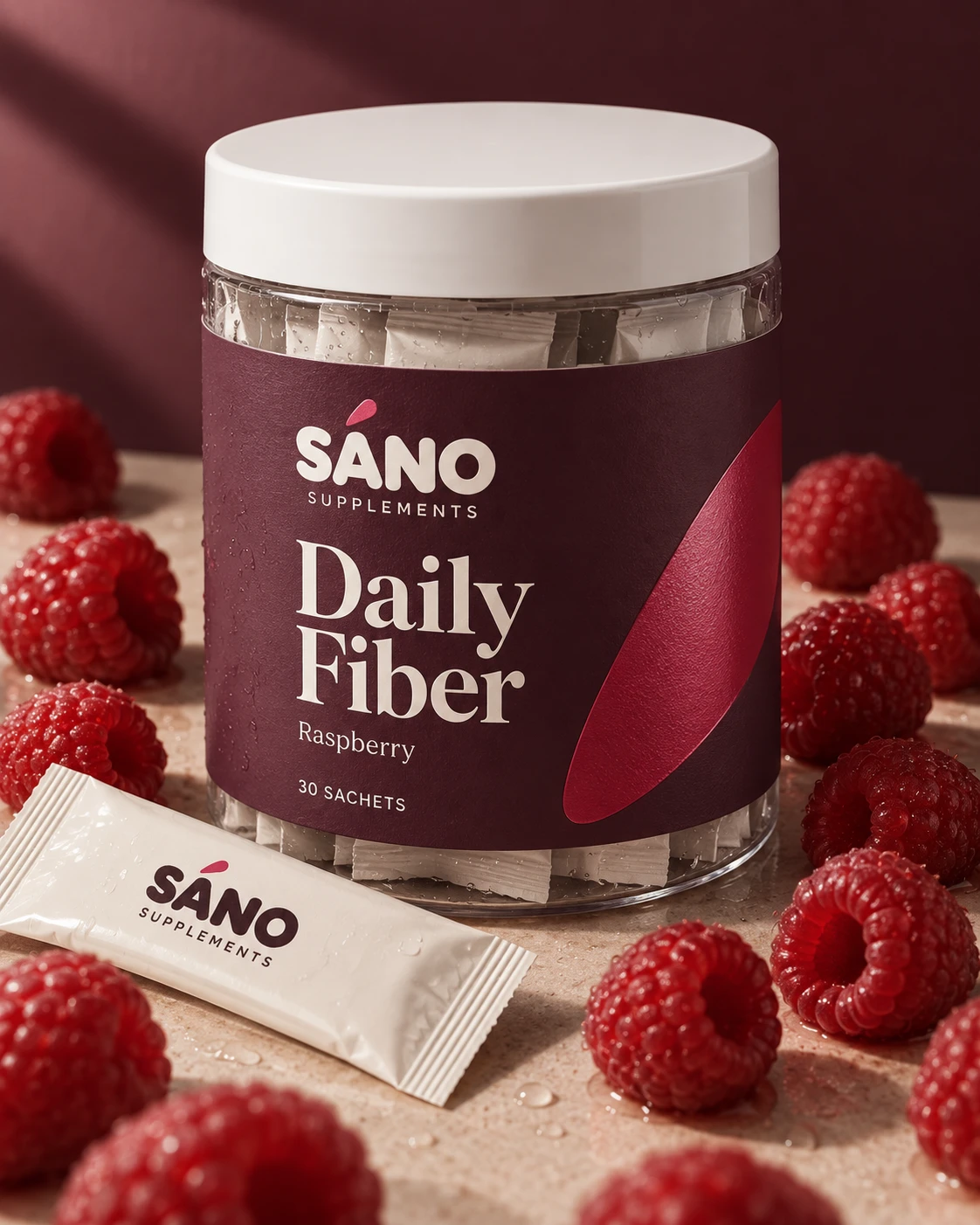
Free shipping over $50 · 60-day money-back guarantee · Prefer not to subscribe? One-time purchase from $49.
Questions
The things people actually ask.
Is this a laxative?
No. There's no senna, no cascara, no stimulant of any kind. Psyllium is a bulk-forming fiber — it works by holding water and adding bulk, not by forcing a contraction. That's exactly why it's made for daily use.
How long until I notice anything?
Most people notice a difference in regularity within the first week. The gas settles around day seven. The microbiome side of it is slower and quieter — that's the part that compounds.
Three grams — is that enough?
Three grams a day is where clinicians typically suggest starting, precisely so your gut adapts without the discomfort that sends people back to the cabinet.
This isn't a rescue remedy. It's three grams a day, every day, which is how fiber actually works.
I'm on a GLP-1. Can I take this with it?
Fiber is routinely recommended for people on these medications. Take Sáno at least two hours apart from any medication, and talk to your prescriber before adding anything — especially if you're on a GLP-1, thyroid medication, or anything with a narrow dosing window.
I'm in menopause. Will this help with hot flashes or weight?
No. This is a fiber supplement. It supports digestive regularity and comfort. Anyone selling you a fiber sachet for hot flashes is selling you something else.
What does it taste like?
Raspberry, sweetened with stevia leaf. No sugar, no sucralose, six calories. Drink it within a minute of stirring and it's a light fruit drink; leave it sitting and it thickens.
Can I take two a day?
One is the intended daily dose. If you want more fiber, add food first.
How do I cancel?
One click from your account page. No phone call, no email chain, no retention offers. If you ever have to fight us to leave, we've failed at the thing we say we're better at.
Start here
You were told this was just part of it.
It's a slowed gut and a fiber gap — two things with a name, and one of them you can do something about tomorrow morning.
Cancel in one click · 60-day money-back guarantee